Universities in Switzerland for international students
If you want to study in Switzerland, public higher education comes in two kinds. The Higher Education Act names cantonal universities and the federal institutes of technology on one side, universities of applied sciences and universities of teacher education on the other (HEdA, Art. 2, version of 1 June 2025).
SERI, the State Secretariat for Education, Research and Innovation, describes universities and universities of applied sciences as equal in status but different in their educational goals (SERI). The main task of the universities is basic research and teaching; universities of applied sciences put more weight on practice-oriented study and applied research.
| Type | Entries on the list | Examples |
|---|---|---|
| Universities, including the two federal institutes of technology | 12 | ETH Zurich, EPFL, University of Geneva, University of Lausanne, University of Zurich |
| Universities of applied sciences | 10 | HES-SO (Haute école spécialisée de Suisse occidentale), ZHAW, Bern University of Applied Sciences, Lucerne University of Applied Sciences and Arts |
| Universities of teacher education | 18 | HEP Vaud, PH Zürich, HEP-BEJUNE |
| Other institutions of the higher education sector | 15 | IMD, IHEID Geneva, César Ritz Colleges Switzerland, Les Roches Global Hospitality Education, Glion Institute of Higher Education |
Only accredited institutions may use the word university
The designations university, university of applied sciences and university of teacher education, in a national language or any other language, are reserved for institutions accredited under the Act (HEdA, Art. 62). Institutional accreditation is also the precondition for federal contributions and for accrediting individual programmes (Art. 28).
A private school without institutional accreditation under the Act may not use these designations in Switzerland. Some permit rules further down also refer to higher education institutions in the sense of the Act, so the status of your school matters beyond its name.
Four national languages, one language of instruction
The National Languages are German, French, Italian, and Romansh.
Federal Constitution of the Swiss Confederation, Art. 4 (English translation, status 3 March 2024)
The language you need depends on the institution and the programme, not on the country. swissuniversities names good knowledge of the language of instruction as the prerequisite for successful study and points applicants to each university's profile for its teaching languages (Study in Switzerland+).
Public and private institutions: fees, admission and teaching
Public universities charge tuition by the semester. ETH Zurich has used two fee groups since the autumn semester 2025. It charges CHF 730 a semester to Swiss and Liechtenstein citizens and to students who were resident in Switzerland or Liechtenstein when they obtained their university entrance qualification, whatever their nationality; other foreign students pay CHF 2,190, apart from a few exceptions such as EU/EFTA citizens who already held a Swiss permit with the right to work before their studies began (ETH Zurich, tuition fees). Students enrolled before then keep the previous fee until they complete their current degree.
Admission to a public bachelor's programme rests on your school-leaving certificate, which must be considered equivalent to the Swiss Maturité (Study in Switzerland+). swissuniversities publishes the requirements for each country and certificate for 2026/27 (admission by country). For the IB Diploma, most universities ask for 32 of 42 points without bonus points, ETH Zurich (for admission without an entrance examination) and EPFL for 38 (swissuniversities, International Baccalaureate).
Private institutions set their own entry rules, intakes and fees. Culinary Arts Academy Switzerland asks for a school-leaving transcript or diploma, proof of English such as TOEFL or IELTS and a motivation letter of at least 500 words, and lists intakes in January, April and July 2027 for its Bachelor of Arts in Culinary Arts (admissions page). The published fees of the private hospitality schools are set side by side on our page on hotel management school fees in Switzerland.
Residence permits for EU and EFTA students
Under the Agreement on the Free Movement of Persons, citizens of EU and EFTA states may live in Switzerland without working, and students are named among them. They must show enough money not to depend on welfare and full health insurance, accident included (SEM factsheet, residing without gainful activity).
Students must also prove admission to a recognised education and training institution. The cantonal migration office then issues a B EU/EFTA permit for the length of the course or for one year, renewed each year until the studies end, as long as the conditions are still met (SEM, FAQ free movement of persons; SEM factsheet).
- Register with the local authorities no later than 14 days after arrival.
- Show admission to a state-recognised institution and the means to support yourself for the whole course.
- Hold health and accident insurance, or an exemption (see the health insurance section).
- Apply for the extension of your permit 14 days before it expires.
- Family reunification for students is limited to the spouse and children entitled to financial support.
Admission itself is a separate question. SEM notes that admission to higher education institutions and the award of scholarships fall outside the free movement agreement, so free movement gives no right to a study place: the institution decides on admission.
Switzerland student visa requirements for non-EU nationals
A foreign national may stay in Switzerland without gainful activity for up to three months without a permit, or for the shorter period a visa allows. A longer stay needs a permit, applied for at the planned place of residence before entry (FNIA, Art. 10, version of 12 June 2026). Admission for education then follows Article 27, which sets four conditions.
- The management of the institution confirms that you can take up the course.
- Suitable accommodation is available.
- The required financial means are available.
- You meet the personal and educational requirements for the course.
Article 27 gives no right to a permit, and the canton decides. SEM's directives add that an education permit is only issued for a full-time school with at least 20 hours of lessons a week: a course of more than a year leads to a B permit, a shorter one to an L permit, and courses are normally approved for eight years at most (SEM directives, section 5.1, status 15 June 2026).
The documents SEM lists
- A confirmation from the school or institution.
- The diploma required for admission, which the Swiss representation may have checked for authenticity.
- A letter of motivation and a CV.
- Proof that the tuition fees are paid, or that the fee rules exempt you from paying in advance.
- Proof of sufficient financial means for the whole course.
- A signed statement that you will leave after the course, not required when the course leads to a Swiss university or university of applied sciences degree.
- The supplementary sheet on language skills and proof of suitable accommodation.
The ordinance lists the usual forms of proof of funds: a guarantee from a solvent person resident in Switzerland with proof of their income and assets, a confirmation from a bank licensed in Switzerland, or a binding commitment of scholarships or study loans (OASA, Art. 23, version of 12 June 2026). SEM's directives also allow other guarantees in individual cases. Neither names a fixed amount; the cantonal migration office assesses the proof.
Visa-required nationals must as a rule appear in person at the Swiss representation, which interviews them about their background, plans and language skills and sends the file to the canton. If the representation cannot judge the applicant's language skills, it orders a test such as IELTS (SEM directives, 5.1.1).
For the permit, SEM expects level A2 for hotel schools that house their students and offer language courses, B1 for other hotel schools, and B2 for universities and institutes of technology, unless the university prescribes a preparatory language course or a higher level (SEM directives, 5.1.1).
Working during and after your studies
For students from outside the EU/EFTA at a university or university of applied sciences, the cantonal authorities can authorise a side job from six months after the course begins. The school must confirm that the work is compatible with the course and will not delay the degree, the employer must apply, pay and conditions must follow local rules, and the limit is 15 hours a week outside the holidays (OASA, Art. 38; SEM, FAQ working).
SEM's directives read this rule as covering higher education institutions under the Higher Education Act: cantonal universities, the federal institutes of technology, universities of applied sciences and universities of teacher education (SEM directives, 5.1.3). If you enrol at a private school, ask the school and the cantonal migration office which rule applies before you count on a job.
Hospitality programmes such as those at César Ritz Colleges and the Culinary Arts Academy include internships. For a full-time course with a compulsory internship, paid internship work can be authorised if it takes no more than half of the total training time, the employer applies, local pay and working conditions are respected and the student has suitable accommodation (OASA, Art. 39).
After graduation
Graduates from outside the EU/EFTA with a degree from a Swiss higher education institution have six months after the end of their course to look for a qualified job, and can be admitted if the work is of high academic or economic interest (FNIA, Art. 21 para. 3; SEM, FAQ working).
The canton issues this job-search permit if the graduate also has sufficient funds and suitable accommodation. During the six months, work of up to 15 hours a week can be authorised, and the permit cannot be extended (SEM directives, 5.1.2). For this rule, SEM counts cantonal universities, the federal institutes of technology, university institutions entitled to federal contributions and universities of applied sciences as Swiss higher education institutions.
Health insurance for students
Anyone who settles in Switzerland must take out health insurance within three months. If you insure within that period, cover runs back to the start of residence, and premiums are due from that date too (FOPH, requirement to obtain insurance).
Students have two ways out of the Swiss scheme, and the canton where they live decides on exemptions (FOPH, foreign students in Switzerland).
- EU/EFTA/UK students who do not work stay insured in their home system and are treated on presentation of the European Health Insurance Card. Once they start working in Switzerland, Swiss insurance becomes compulsory.
- Students from other countries can apply for an exemption if their private policy offers cover equivalent to a Swiss insurer's. The exemption runs for three years and can be extended for three more; after that, Swiss insurance is compulsory.
EPFL's budget for students from outside Europe assumes a health insurance scheme costing at least CHF 113 to 120 a month (EPFL, financing your studies).
Cost of studying in Switzerland
At a public university, living costs weigh more than tuition. EPFL in Lausanne publishes an itemised budget for students from abroad, without tuition, and Lausanne sits in the Lake Geneva region where several of the private institutions on this site are based.
| Item | Per month (CHF) | Per year (CHF) |
|---|---|---|
| Housing | 900 | 10,800 |
| Food | 600 | 7,200 |
| Health insurance, students from outside Europe | 113 to 120 | 1,400 |
| Study supplies | 100 | 1,200 |
| Transport | 60 | 720 |
| Residence tax | 37 | 444 |
| Personal liability insurance | 10 | 120 |
| Radio and television fee | 30 | 335 |
| Other expenses | 250 | 3,000 |
| Total without tuition | 2,107 | 25,219 |
Tuition comes on top: at ETH Zurich CHF 2,190 a semester for students in the higher fee group, and at private institutions whatever their published fee schedule says. The same total matters for the permit, because the canton checks that your funds cover the whole course.
Private universities in Switzerland on this site
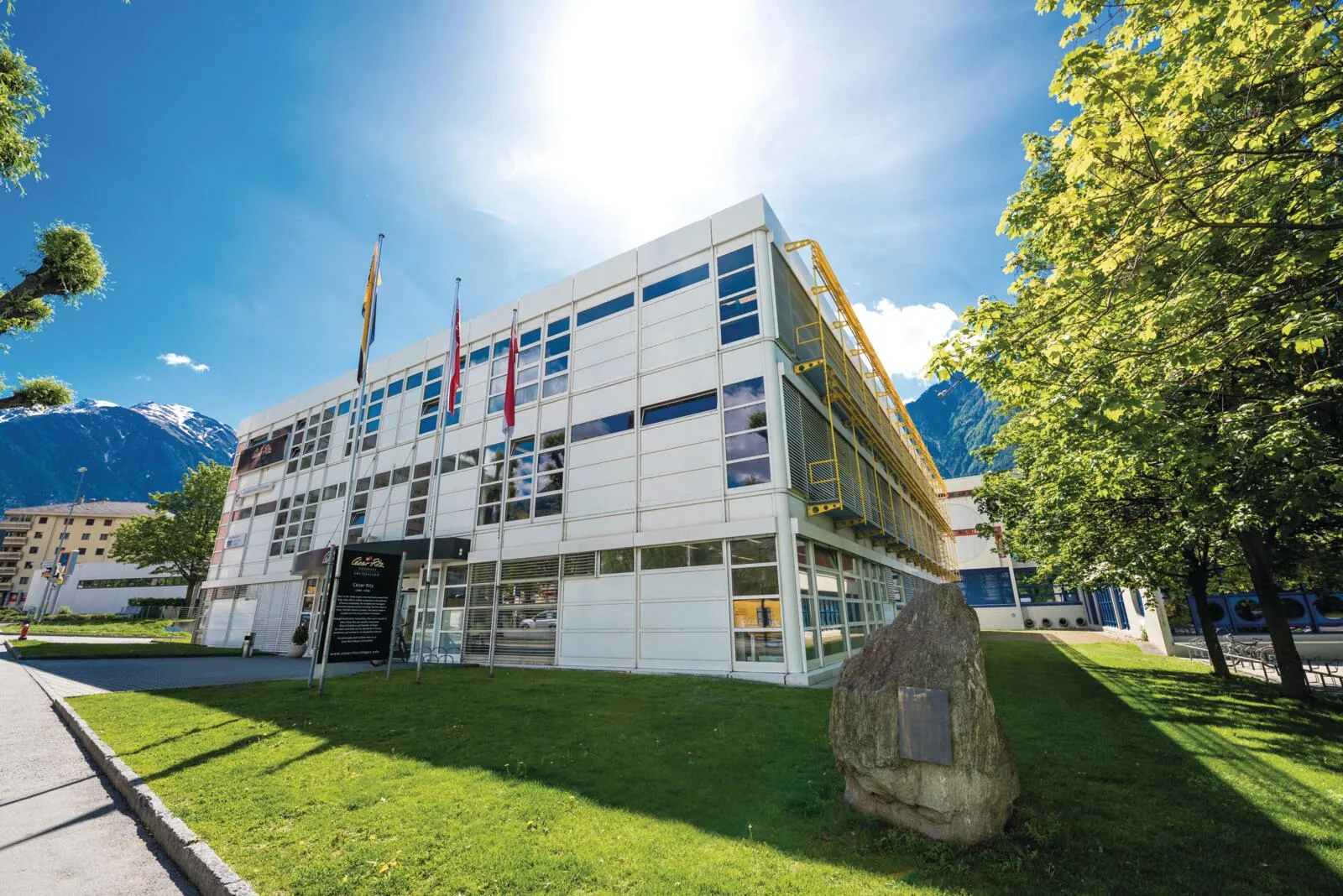
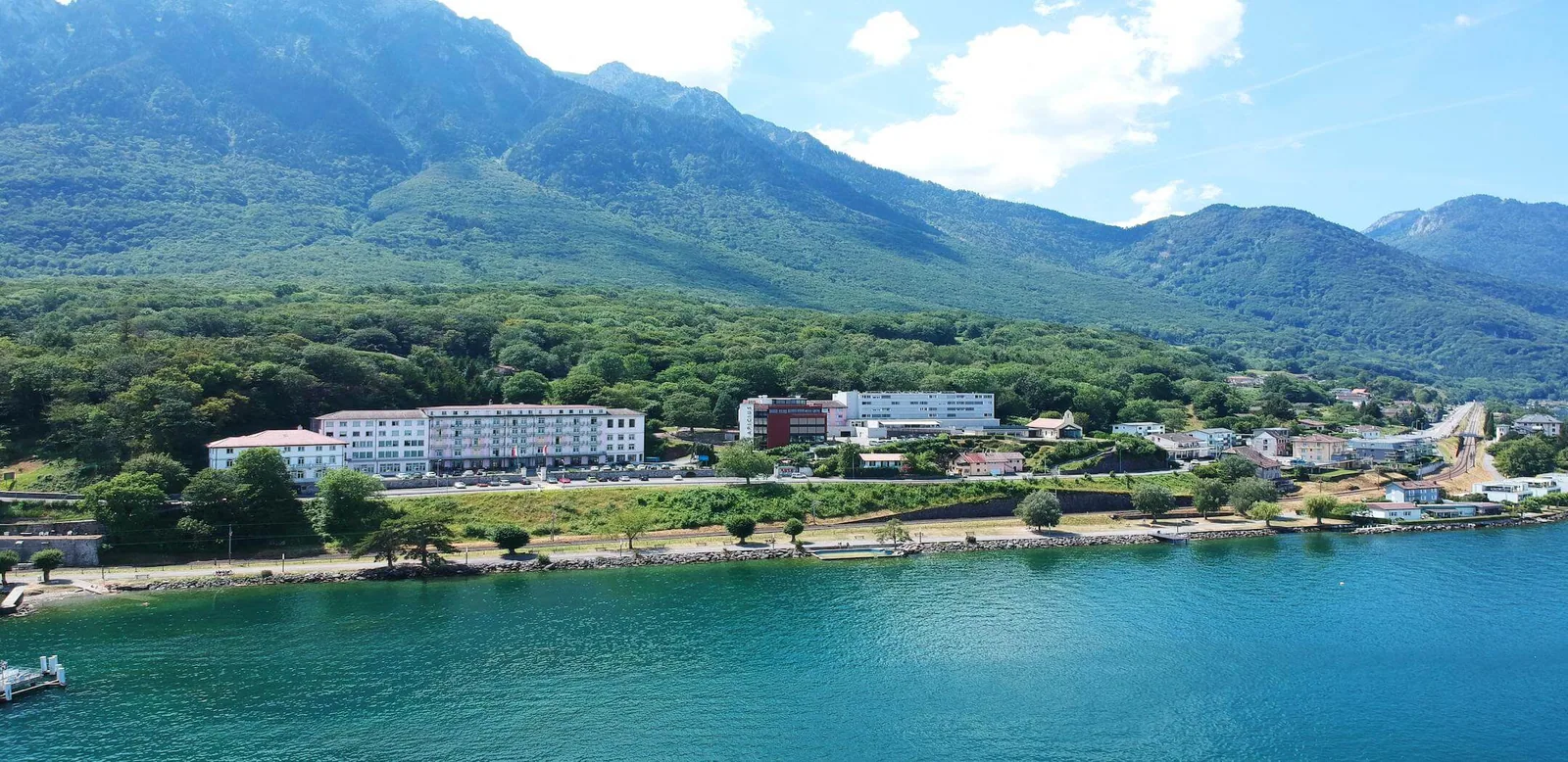
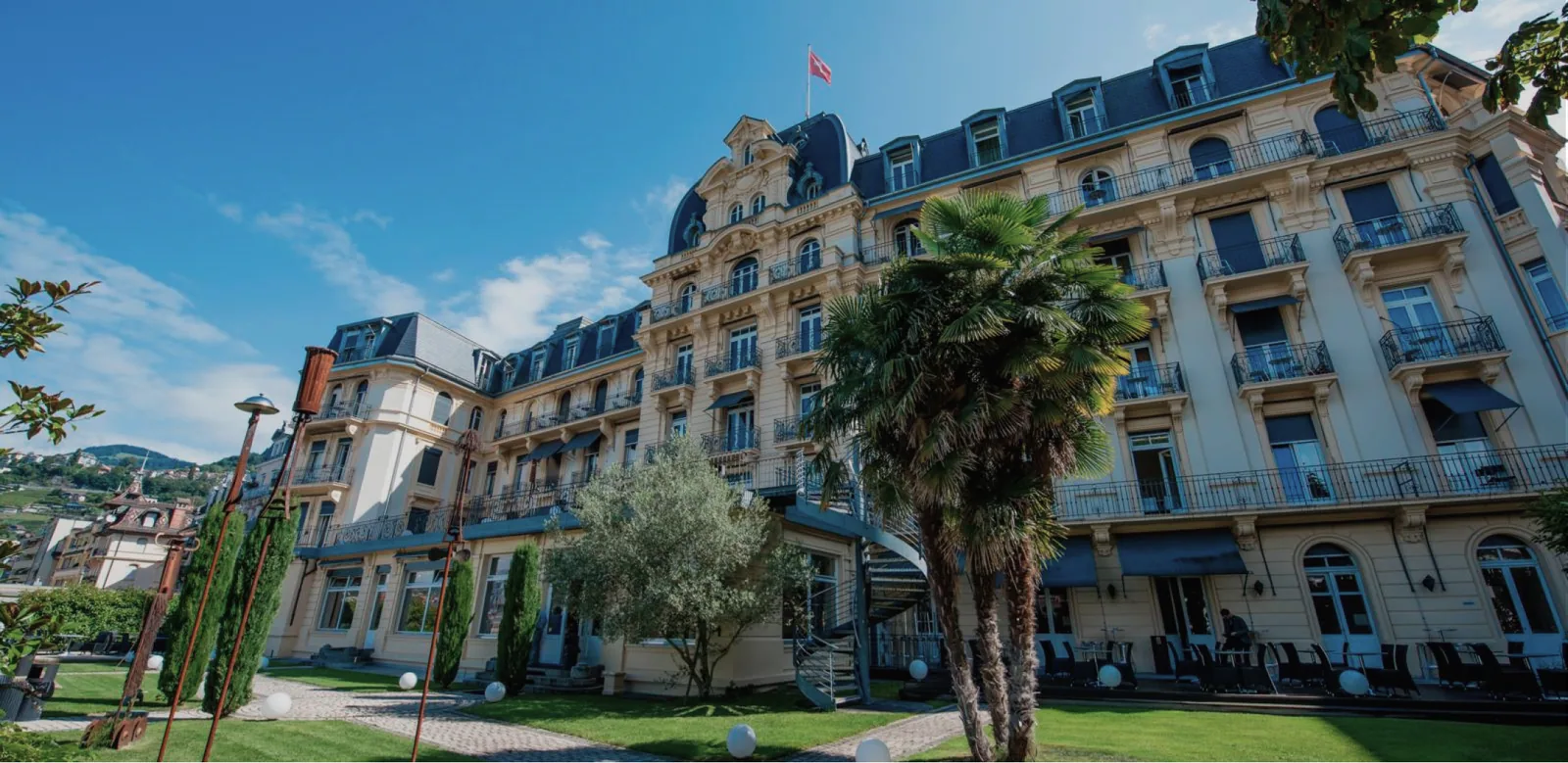
Our site lists seven private institutions. Two teach hospitality and culinary arts: César Ritz Colleges, whose campus is in Brig, and the Culinary Arts Academy, with campuses in Le Bouveret and Brig. Five are business schools: HIM Business School, IFM Business School in Geneva, International Management School Geneva, Business School Lausanne and Geneva Business School.
Of the seven, César Ritz Colleges Switzerland is on the swissuniversities list, as a university of applied sciences institute, and describes itself that way on its own site. The other six are neither on that list nor in the Swiss Accreditation Council's register of decisions, updated on 3 September 2026. For each of them, read the school's accreditation page, ask which institution awards the degree, and ask how the work and job-search rules above apply to its students.
The private institutions on this site
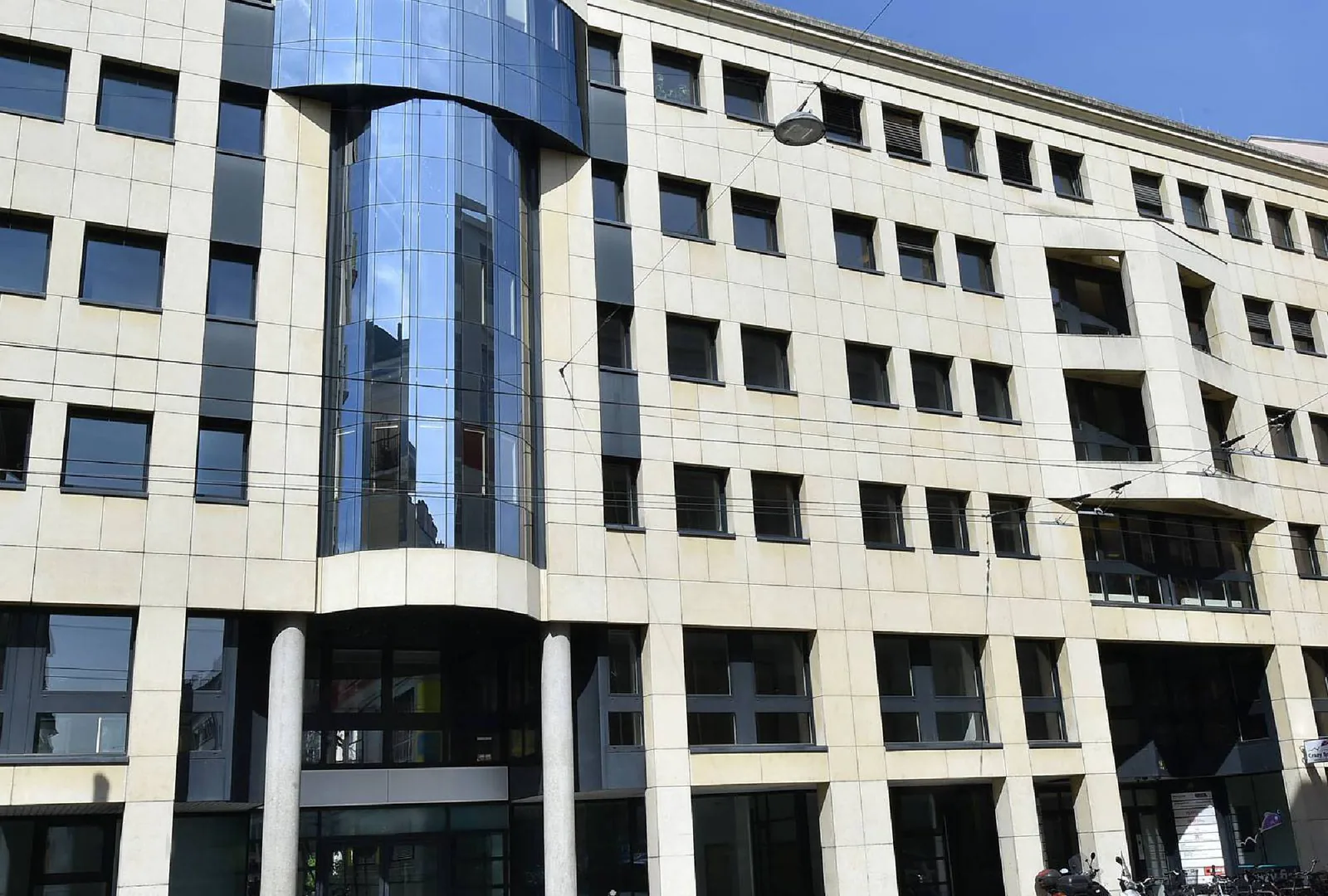
 International Management School GenevaFees 2026/27not on file
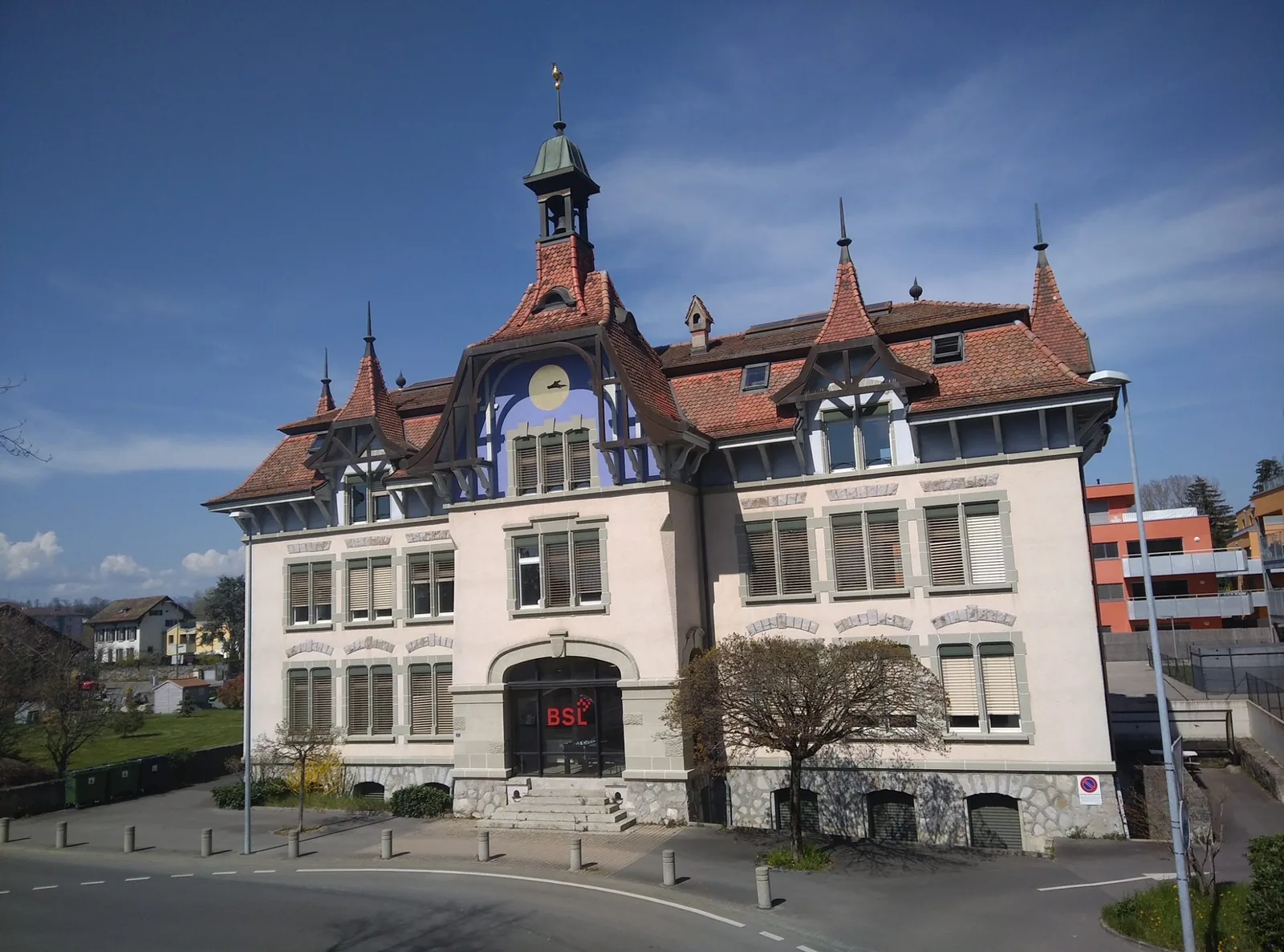


We are an independent search and selection service. We put the current published figures and options of these institutions in front of you and suggest a shortlist, with the reason for each; the overview of all seven is on our universities page, and you can write to us with your plans.
How to study in Switzerland from abroad: a timeline
- Choose the programme and check the institutionConfirm the language of instruction and look the institution up on the swissuniversities list or in the Swiss Accreditation Council's register. For a private school, ask which body accredits the programme and who awards the degree.
- Check your certificateswissuniversities lists the entry requirements for public universities by country and certificate for 2026/27. Private schools publish their own, such as the English test Culinary Arts Academy asks for.
- Secure your placeThe permit needs the institution's confirmation, and SEM lists proof of paid tuition, or of an exemption from paying in advance, among the documents.
- Apply for the permit before you travelStudents from outside the EU/EFTA apply before entry; visa-required nationals do so in person at the Swiss representation, which interviews them and passes the file to the canton.
- Register on arrivalEU/EFTA students register with the local authorities within 14 days and apply for each yearly extension 14 days before the permit expires.
- Arrange health insuranceTake out Swiss insurance within three months, or apply to the canton for an exemption if your cover is equivalent.
- Plan any workThe canton can authorise a side job for students from outside the EU/EFTA at universities and universities of applied sciences from six months after the course begins, for up to 15 hours a week outside the holidays.
Questions parents ask
- Is it free to study in Switzerland?
- No. Basic education at state schools is free under the Federal Constitution (Art. 19 and 62), but universities charge tuition. Since autumn 2025, ETH Zurich has charged CHF 730 a semester to Swiss and Liechtenstein citizens and to students who gained their entrance qualification while resident there, and CHF 2,190 to most other foreign students. Private institutions set their own fees, compared on our hotel school fees page. Living costs come on top: EPFL budgets CHF 2,107 a month for a foreign student.
- Can US citizens study in Switzerland?
- Yes. As nationals of a state outside the EU/EFTA they need a place at an institution and a residence permit for education under Article 27 of the Foreign Nationals and Integration Act: the institution's confirmation, suitable accommodation, sufficient funds and the personal and educational requirements for the course. The permit must be applied for before entry, and the canton decides. Visa-required applicants of any nationality apply in person at a Swiss representation, as a rule.
- How much money do I need for a Swiss student visa?
- The ordinance names the forms of proof, not an amount: a guarantee from a solvent person resident in Switzerland, a confirmation from a bank licensed in Switzerland, or a binding scholarship or loan commitment (OASA, Art. 23). The cantonal migration office judges whether the funds cover the whole course. As a benchmark, EPFL budgets CHF 25,219 a year for a foreign student in Lausanne, before tuition.
- Can I work on a Swiss student visa?
- The canton can authorise students from outside the EU/EFTA at a university or university of applied sciences to work up to 15 hours a week outside the holidays, starting six months after their course begins. The school must confirm that the job is compatible with the course and will not delay the degree, and the employer must apply (OASA, Art. 38). Work during a compulsory internship can be authorised if it takes no more than half of the total training time (Art. 39).
- Can I stay in Switzerland after my studies?
- Graduates from outside the EU/EFTA with a degree from a Swiss higher education institution get six months after the end of their course to look for a qualified job (FNIA, Art. 21 para. 3). The canton issues this permit if they have sufficient funds and suitable accommodation; work of up to 15 hours a week can be authorised during it, and it cannot be extended. A job offer then needs a work permit, which can be granted where the work is of high academic or economic interest.
- Do I need to speak German or French to study in Switzerland?
- Only if your programme is taught in it. Switzerland has four national languages, German, French, Italian and Romansh, and you need good knowledge of the language of instruction. For the permit, SEM expects level B2 for universities, B1 for other hotel schools and A2 for hotel schools that house their students and offer language courses. Private schools teaching in English, such as Culinary Arts Academy, ask for proof such as TOEFL or IELTS.
- Are private universities in Switzerland recognised?
- In Switzerland the word university is reserved for institutions accredited under the Higher Education Act (Art. 62). swissuniversities publishes the list; among its other institutions it names César Ritz Colleges Switzerland, Glion Institute of Higher Education and Les Roches Global Hospitality Education as university of applied sciences institutes. For a school that is not on it, ask which body accredits the programme and which institution awards the degree.
- How long is a Swiss student permit valid?
- EU/EFTA students receive a B EU/EFTA permit for the length of the course or for one year, renewed each year until they finish. Students from other countries receive a B permit if the course lasts more than a year and an L permit if it is shorter. Courses are normally approved for eight years at most, and the canton checks that exams are taken in good time before it renews the permit.
Sources
- Accredited Swiss Higher Education Institutions in accordance with HEdA
- Accredited higher education institutions and study programmes: decisions of the Swiss Accreditation Council (updated 3 September 2026)
- Federal Act on the Funding and Coordination of the Swiss Higher Education Sector (HEdA), SR 414.20, version of 1 June 2025
- The Institutes of Higher Education
- Federal Constitution of the Swiss Confederation, SR 101, status 3 March 2024
- Admission
- Tuition fees
- Admission requirements by country, valid for 2026/27
- International Baccalaureate: admission requirements, valid for 2026/27
- Admissions
- Rundschreiben: Anerkennung von Privatschulen, die im Privatschulregister Schweiz eingetragen sind (16 May 2024)
- Factsheet: Residing in Switzerland without gainful activity
- FAQ: Free Movement of Persons
- Federal Act on Foreign Nationals and Integration (FNIA), SR 142.20, version of 12 June 2026
- Weisungen und Erläuterungen I. Ausländerbereich (Weisungen AIG), status 15 June 2026
- Verordnung über Zulassung, Aufenthalt und Erwerbstätigkeit (VZAE/OASA), SR 142.201, version of 12 June 2026
- FAQ: Working
- Health insurance: Requirement to obtain insurance for persons resident in Switzerland
- Health insurance: Foreign students in Switzerland
- Financing your studies
- Hospitality Business School
Sources read and figures checked on 23 Sept 2026. Fees and dates change; the school's own documents are what count.